Japan Autumn Leaves Forecast 2026: Dates, Regions and Best Places
Published: April 17, 2026 Updated: September 3, 2026
Author: Bond - Siwrat Kongthon
Plan Japan autumn leaves in 2026 with the official JMC forecast, red maple and yellow ginkgo dates, regional timing, routes, transport, and live foliage checks.
Quick Answer: When Should You See Japan's Autumn Leaves in 2026?
Japan's autumn leaves move from the coldest, highest places in Hokkaido towards the cities and temples of central and western Japan. A practical historical guide is late August to October in Hokkaido, late September to late October in higher parts of Honshu, mid-November to early December in Tokyo, Kyoto and Osaka, and later in some low-elevation or sheltered areas.
The first official 2026 foliage forecast from the Japan Meteorological Corporation (JMC) was released on 2 September 2026. It gives separate red-maple and yellow-ginkgo dates for major cities, so use the tables below as the current planning reference rather than looking for one nationwide peak date. JMC's next forecast is expected in early October.
JMC expects autumn temperatures to stay generally warmer than normal nationwide. As a result, foliage in many areas is forecast to be around normal or later than normal, with the clearest delays in some northern and higher-elevation locations. The JMC forecast release is the primary source for the dates below.
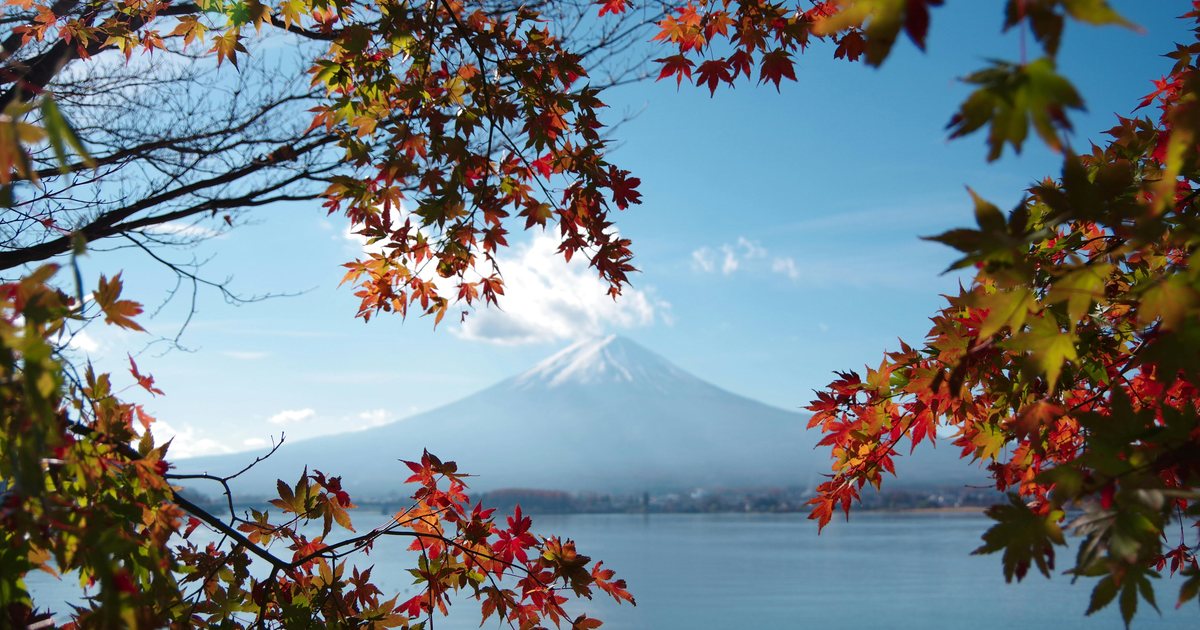
Official JMC 2026 Forecast: Red Maple and Yellow Ginkgo
JMC's first forecast covers around 700 foliage-viewing locations from Hokkaido to Kagoshima, plus mountain forecasts by altitude. JMC's city date is the predicted first day when most leaves on the relevant sample tree have turned red or yellow. Red maple and yellow ginkgo therefore have different dates and should not be combined into a single “peak” date.
Red maple forecast
| City | JMC forecast date | JMC average date | Compared with average |
|---|---|---|---|
| Sapporo | 7 Nov 2026 | 28 Oct | 10 days later |
| Aomori | 13 Nov 2026 | 13 Nov | Same date |
| Sendai | 25 Nov 2026 | 21 Nov | 4 days later |
| Nagano | 21 Nov 2026 | 12 Nov | 9 days later |
| Tokyo | 29 Nov 2026 | 28 Nov | 1 day later |
| Kanazawa | 30 Nov 2026 | 24 Nov | 6 days later |
| Nagoya | 2 Dec 2026 | 28 Nov | 4 days later |
| Kyoto | 11 Dec 2026 | 5 Dec | 6 days later |
| Osaka | 4 Dec 2026 | 1 Dec | 3 days later |
| Hiroshima | 28 Nov 2026 | 22 Nov | 6 days later |
| Fukuoka | 7 Dec 2026 | 1 Dec | 6 days later |
| Kagoshima | 10 Dec 2026 | 15 Dec | 5 days earlier |
Yellow ginkgo forecast
| City | JMC forecast date | JMC average date | Compared with average |
|---|---|---|---|
| Sapporo | 6 Nov 2026 | 4 Nov | 2 days later |
| Aomori | 6 Nov 2026 | 2 Nov | 4 days later |
| Sendai | 29 Nov 2026 | 23 Nov | 6 days later |
| Nagano | 14 Nov 2026 | 10 Nov | 4 days later |
| Tokyo | 26 Nov 2026 | 23 Nov | 3 days later |
| Kanazawa | 10 Nov 2026 | 10 Nov | Same date |
| Nagoya | 17 Nov 2026 | 18 Nov | 1 day earlier |
| Kyoto | 27 Nov 2026 | 24 Nov | 3 days later |
| Osaka | 24 Nov 2026 | 22 Nov | 2 days later |
| Hiroshima | 20 Nov 2026 | 15 Nov | 5 days later |
| Fukuoka | 27 Nov 2026 | 20 Nov | 7 days later |
| Kagoshima | 27 Nov 2026 | 25 Nov | 2 days later |
These are city-level JMC dates, not a guarantee for every park, garden or mountain nearby. For spot-level and altitude-specific updates, use the JMC Autumn Foliage page and its linked Autumn Foliage Navigator.
Historical Timing at a Glance
| Area | Historical planning window | Best fit |
|---|---|---|
| Hokkaido alpine areas | Late August to mid-September | The earliest colour, mountain scenery and ropeways |
| Hokkaido valleys and cities | Late September to early November | Cooler air, onsen, food and flexible road trips |
| Higher Honshu mountains | Late September to late October | Lakes, waterfalls, hiking and gondola views |
| Tokyo, Hakone and Kawaguchiko | Late October to early December | Gardens, ginkgo, Fuji views and onsen |
| Kyoto and Osaka | Mid-November to early December | Temple gardens, maple canopies and city breaks |
These are broad historical ranges. Elevation, tree species, wind and the temperature pattern of each autumn can move a particular viewpoint earlier or later.
Hokkaido: The Earlier Autumn Leaves Route
Hokkaido is the better choice if you want to travel in September or early October, prefer mountain scenery to temple crowds, or want a route that works well with a rental car. The colour does not arrive everywhere at once: high alpine areas change first, then the valleys, then Sapporo and the lower coastal towns.
Daisetsuzan and Asahidake
Historical pattern: in the high zone, colour has started in late August, with the strongest historical window around mid-September; lower trails can continue into late September.
Start at Asahidake if you want one of Japan's earliest autumn-leaf destinations. The ropeway reaches Sugatami Station at about 1,600m beneath 2,291m Mount Asahidake, so you can see alpine colour without committing to a long summit hike. Walk the Sugatami loop for volcanic scenery, small ponds and changing mountain vegetation. Allow 2–4 hours, or longer if you plan a proper hike.
Stay near Asahidake Onsen or base yourself in Asahikawa. A car takes roughly 60 minutes from Asahikawa Airport and about 1 hour 10 minutes from Asahikawa Station; from Sapporo it is a much longer day. A car is useful here, but the ropeway, mountain weather and trail conditions matter more than the drive. Check the Asahidake official conditions and camera before leaving, and read the Daisetsuzan safety guidance because early snow is possible in autumn.
Sounkyo and Kurodake
Higher elevations lead the historical season: the summit can begin changing in late August; colour normally works down towards Sounkyo over roughly a month, with the valley often strongest from late September into early October.
At Sounkyo, a dramatic gorge makes the altitude sequence easy to see. The ropeway rises to about 1,300m, with a lift and hiking options towards 1,984m Kurodake. Allow 2–4 hours for the ropeway, viewpoints and a short walk; allow a full day if you want to explore the gorge as well.
From JR Kamikawa, the bus takes about 30 minutes. Driving from the Kamikawa-Sounkyo interchange is practical, and parking is available, so a car helps if you want to combine several gorge viewpoints. The official Sounkyo and Kurodake information is the place to check ropeway operation and access before a mountain day.
Jozankei
A typical Jozankei season: higher gondola areas can start in late September; the valley and gorge are usually strongest in early to mid-October, with colour lasting into late October or early November in some areas.
Use Jozankei when you want to add Hokkaido foliage and an onsen stay without changing your Sapporo base. Choose the Hoheikyo Dam area for a gorge-and-water route, or use the Sapporo Kokusai Koyo Gondola for higher views. Allow half a day to a full day, or stay overnight if you want the onsen experience.
The official 2026 seasonal transport dates currently listed are 3–25 October for the Hoheikyo Dam Liner and 1–20 October for the Sapporo Kokusai Koyo Gondola. These are operating/event dates, not predictions of peak colour. The last section of the road to Hoheikyo is car-free, so a car is useful for reaching Jozankei but does not remove the need to walk or use the local shuttle. Check the Jozankei 2026 autumn information and expect heavy weekend traffic from Sapporo.
Niseko and Annupuri
For historical planning: high roads and gondola areas can start in late September; the best historical window is early to mid-October, while lower villages can hold colour into late October.
Niseko suits travellers who want mountain scenery, good food and a possible winter-resort scouting stop. The Panorama Line is the strongest driving route, with Kagami Numa, Goshiki Onsen and Annupuri adding different views. Allow half a day to a full day; add an overnight if you want to combine foliage with onsen or local food.
A rental car is strongly useful because the viewpoints are spread across several valleys and roads. Local buses and shuttles can work from one base, but they give you less flexibility when colour or weather differs by elevation. The Niseko United autumn guide gives the historical timing by viewpoint, while the Niseko access page helps with the distance from Sapporo.
Sapporo
JMC's 2 September city forecast: red maple is forecast for 7 November 2026, while yellow ginkgo is forecast for 6 November 2026. JMC's average dates are 28 October and 4 November respectively, so the two species should not be treated as one peak date.
Sapporo gives you the most flexible Hokkaido base because you can walk or use public transport between foliage spots. Try the ginkgo avenue at Hokkaido University, Nakajima Park, Maruyama Park and Hokkaido Shrine, or take the ropeway up Mount Moiwa for a city-and-forest view. Allow 2–4 hours per park cluster rather than trying to see every site in one day.
You do not need a car for the city. That is useful if your trip is short or the weather is unsettled: keep a park morning flexible, then switch to food, shopping or a museum. The official Sapporo autumn guide and Sapporo foliage spot guide are practical starting points for local updates.
Otaru
A typical historical window: higher viewpoints can start in early to mid-October; the strongest city-and-hillside window is usually late October to early November.
Pair Otaru with Sapporo for a change of pace: combine the historic centre and old railway line with Asarigawa Onsen or a Tenguyama viewpoint. Allow half a day in the city, or a full day if you add a hillside or onsen stop.
Central Otaru is easy by JR, so a car is not necessary for the core city. It becomes useful for Asari, Tenguyama and more scattered viewpoints. The local Otaru foliage archive contains useful 2025 reports from late October to early November, but use those as recent context rather than a promise for 2026.
Honshu: Mountains First, Cities Later
Honshu gives you more rail-friendly routes and a wider mix of mountains, lakes, gardens, temples and onsen. If your trip is in late November, Kyoto, Tokyo and Hakone are usually easier to combine. If you travel in early or mid-October, start with higher areas such as Hakuba, Myoko, Kamikochi or Nikko.
Zao Onsen
Historical sequence: late September starts in the higher Echo Line and ropeway areas; high routes are often strongest in early to mid-October, followed by the onsen village and lower slopes later in October.
Choose Zao when mountain colour and an onsen base matter equally. Use the ropeway for higher views, then return to the village for a slower evening. Allow half a day to an overnight. A car helps for the Echo Line and scattered viewpoints, but road closures and mountain weather need checking. The official Zao Onsen site and Yamagata foliage information are useful for seasonal access.
Hakuba Valley
Hakuba follows a descending historical season: high lift areas can begin around the end of September; the colour usually cascades down through October, with lower valley views strongest in mid to late October and sometimes early November.
For a scenic mountain day with lift access, consider Happo Pond at about 2,060m, Tsugaike around 2,010m, Iwatake Mountain Harbor or Oide Park. Allow 2–5 hours per outing, depending on the lift and hike, or make it a full day if you want two viewpoints.
You can travel between some areas by bus, but a car is useful if you want to compare several valleys. The Hakuba Valley trekking guide explains the route difficulty and altitude; autumn weather can change quickly at the top.
Myoko
Myoko usually progresses from high to low: high Koya Pond starts in late September; Sasagamine and gondola areas are commonly strongest in early to mid-October, with Naena Falls, Imori Pond and lower onsen areas following in mid to late October.
Choose Myoko if waterfalls and ponds matter as much as mountain colour. Combine Naena Falls with Imori Pond or the Sky Cable. Allow 2–5 hours, depending on whether you stay near one site or drive between several.
A car is recommended for the dispersed trailheads, although rail and taxi are possible. The Myoko autumn guide is useful for spot-by-spot timing, and JNTO's Naena Falls guide covers the short walk and access options.
Kamikochi
Plan around October: higher and exposed parts can begin in late September or early October; the broad valley season is usually October, with the best chance of strong colour in the first half of the month.
Kamikochi suits travellers who want a slower walking day beside rivers, ponds and mountain views. A Kappabashi–Myojin walk or the Taisho Pond side of the valley can fill 2–5 hours. Autumn weekends are busy, so start early if the weather is clear.
Private cars cannot enter Kamikochi. Drive only as far as the Sawando or Hirayu transfer areas, then continue by shuttle or taxi. Public transport from Matsumoto also works. Check the official Kamikochi access page and car-access rules before setting out.
Nikko, Okunikko and Lake Chuzenji
Timing is elevation-led: the higher areas can start in late September or early October; Ryuzu Falls, Senjogahara and Lake Chuzenji are often strongest from early to mid-October, while Irohazaka and Nikko town run later into late October or early November.
From Tokyo, Nikko is one of the easiest early-colour side trips. A strong route links Ryuzu Falls, Senjogahara, Lake Chuzenji, Kegon Falls and Akechidaira, but you do not need to fit everything into one rushed day. Allow a full day, or stay at Chuzenji/Yumoto if foliage is the main reason for going.
Buses from JR or Tobu Nikko are practical. A car gives you more freedom, but Irohazaka traffic is a serious autumn risk; Nikko's official advice favours staying higher and starting early. Use the official Okunikko autumn route and Lake Chuzenji information when planning.
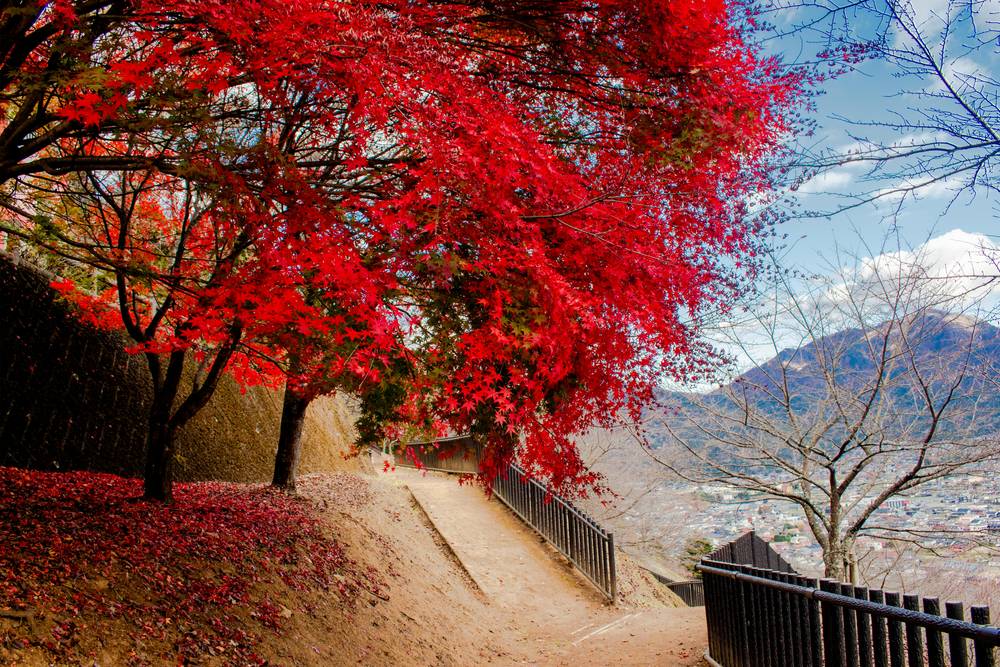
Fuji and Onsen: Kawaguchiko or Hakone
Kawaguchiko: Momiji Tunnel and Momiji Corridor
Historical guide: colour can start in late October or early November; the main historical window for the maple tunnel and corridor is early to mid-November, with sheltered leaves sometimes lasting later.
Choose Kawaguchiko when Mount Fuji and red maple are the main photo goals. Visit Momiji Tunnel and Momiji Corridor, then keep a second morning flexible because Fuji visibility can change quickly. Allow 2–4 hours for the foliage stops, plus extra time for traffic and lakeside transport.
The local bus from Kawaguchiko Station to the Natural Living Center is practical, followed by a walk. A car is convenient but parking and road congestion can erase the time you hoped to save. The Yamanashi official foliage guide is the best starting point for access and seasonal information. The official page still gives the general November festival timing, but specific 2026 festival dates were not published as of 3 September 2026.
Hakone: Lake Ashi, Gora and Hakone-Yumoto
Historical timing by elevation: Lake Ashi can start in late October; Gora, Owakudani and Sengokuhara are commonly strongest in early to mid-November; Hakone-Yumoto starts and peaks later, around late November to early December.
Choose Hakone if you want autumn leaves and an onsen rather than a foliage-only day. Use the ropeway, cruise and local trains to choose one elevation zone instead of forcing the whole loop. Allow one full day, or stay two nights if you want a slower route.
You can manage Hakone without a car. Driving and parking are often frustrating in the busiest foliage weeks. The Hakone seasonal guide explains the zone-by-zone progression. If you want the Hakone Museum of Art in Gora, note that its scheduled 2026 reopening is 30 October after renovation; confirm the operating status before visiting.
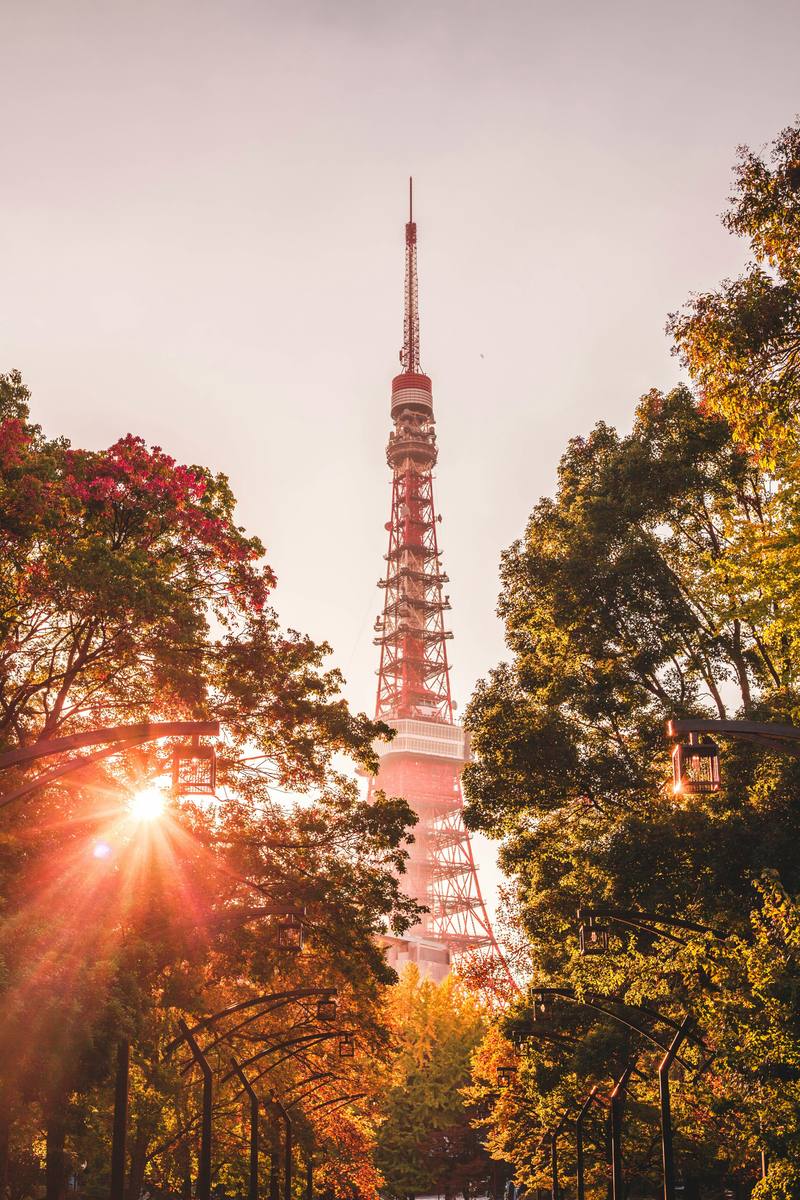
Tokyo: Easy City Foliage
Tokyo is a useful late-November base because you can see different tree species without changing hotels. JMC's 2 September city forecast puts red maple at 29 November 2026 and yellow ginkgo at 26 November 2026, compared with average dates of 28 November and 23 November. Gardens, ginkgo and mixed parks still do not peak on the same day.
Rikugien
A compact historical window: late November to early December, sometimes into mid-December.
Rikugien works especially well for a compact traditional garden and a possible evening viewing event. Follow the pond and hill paths and allow 1.5–2 hours. Komagome Station is about a seven-minute walk, so a car is unnecessary. The garden usually announces its night viewing separately; 2026 dates were not published on the official calendar as of 3 September 2026. Watch the official Rikugien calendar rather than copying the 2025 event dates.
Meijijingu Gaien
The ginkgo season historically runs: mid-November to early December for the ginkgo avenue.
For Tokyo's classic yellow-ginkgo walk rather than a red-maple stop, allow 1–2 hours and combine it with Aoyama or Shinjuku. Use the train or subway; driving is inconvenient because the avenue is urban and parking is limited. The GO TOKYO autumn guide is useful for the citywide season, but check local access before going.
Shinjuku Gyoen
Expect a staggered city season: mid-to-late November into early December, with different trees changing at different times.
If you want space and variety rather than one famous photo angle, Shinjuku Gyoen is the easiest Tokyo option. Expect maples, ginkgo, plane trees and broad lawns. Allow 2–3 hours. Take the train or metro and visit on a weekday morning if possible. The official Shinjuku Gyoen autumn highlights are more useful than a single national peak date.
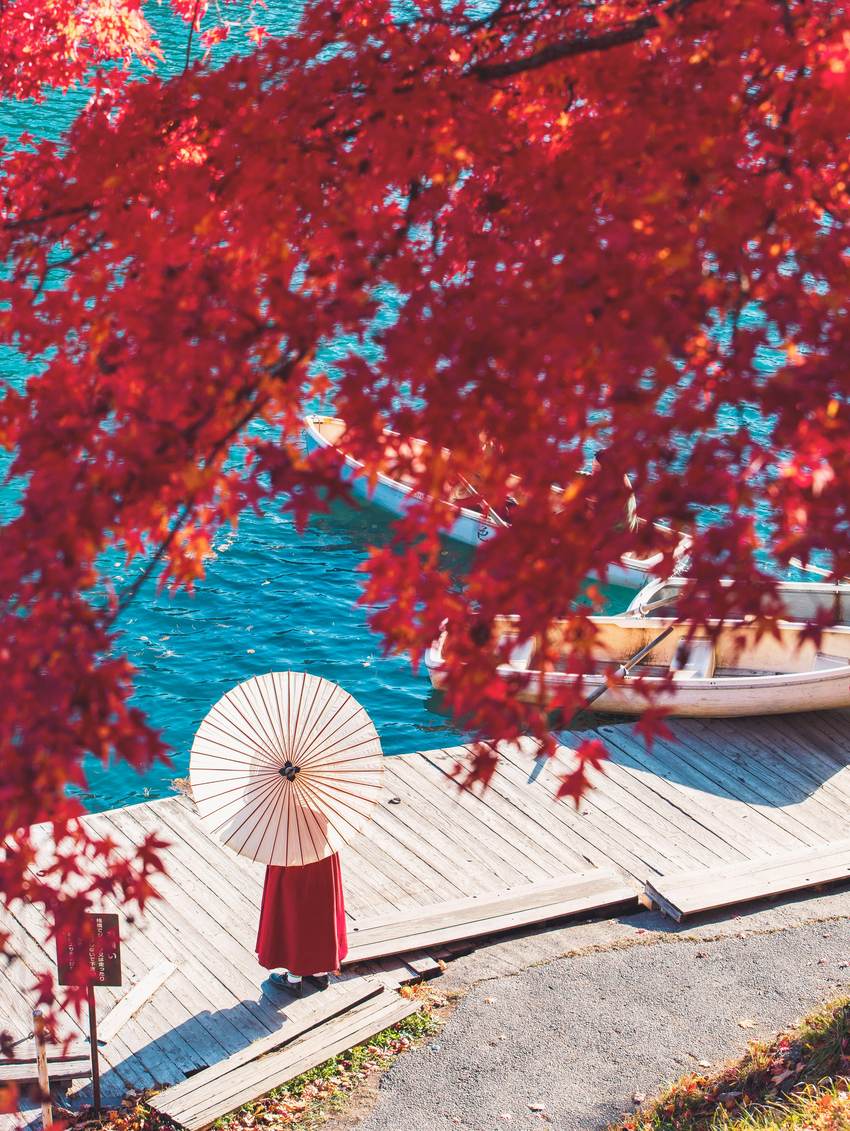
Kyoto and Osaka: The Classic Late-Autumn Route
Kyoto is usually at its most crowded when the famous maple sites are at their best. JMC's 2 September city forecast puts Kyoto's red maple date at 11 December 2026 and yellow ginkgo date at 27 November 2026. For Osaka, the corresponding dates are 4 December for red maple and 24 November for yellow ginkgo. These are separate tree forecasts, not one combined peak. Start early, use public transport, and avoid building a whole day around three places on opposite sides of the city. Osaka is a practical base if Kyoto accommodation is expensive, and Minoh gives you a short nature escape without changing hotels.
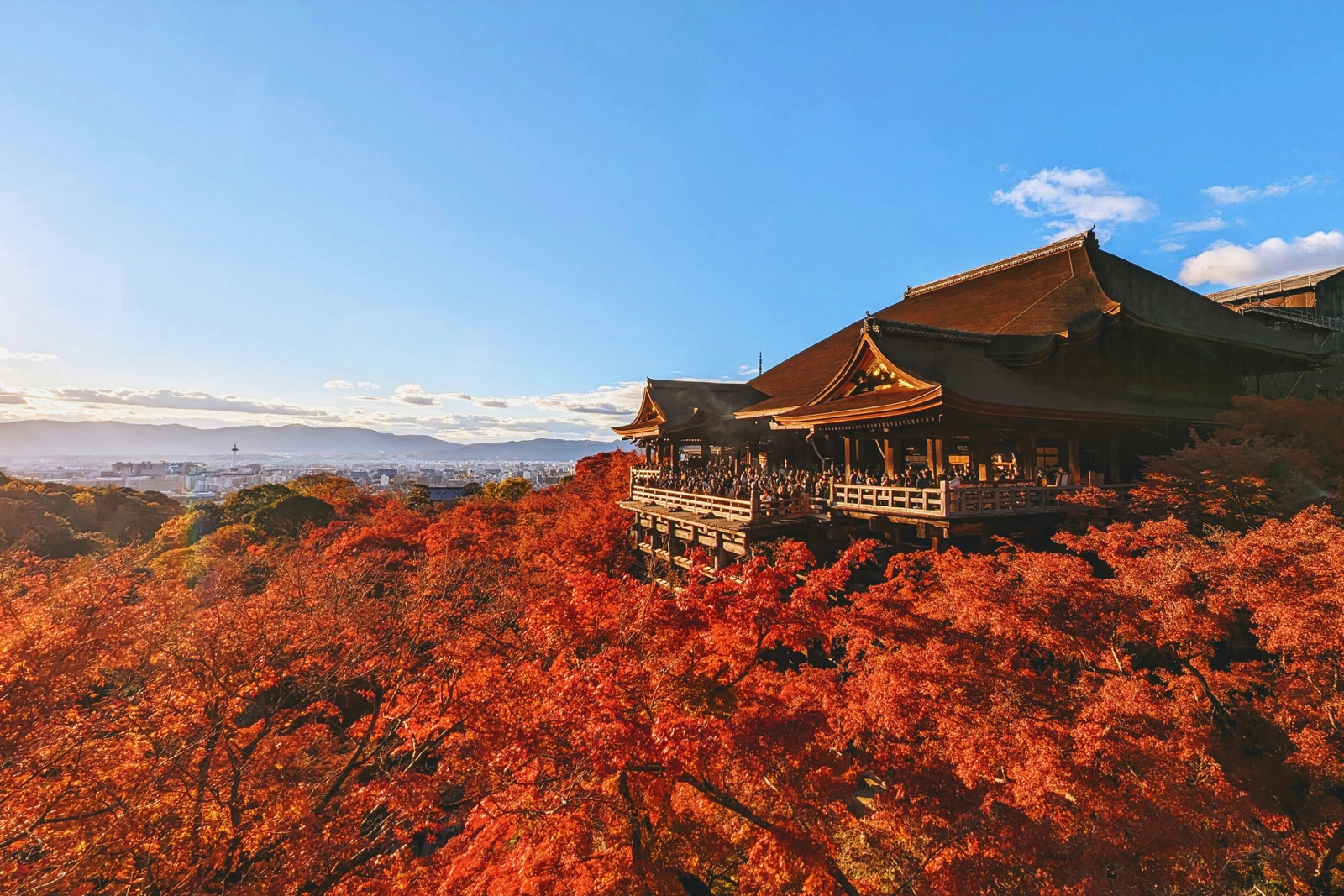
Tofukuji
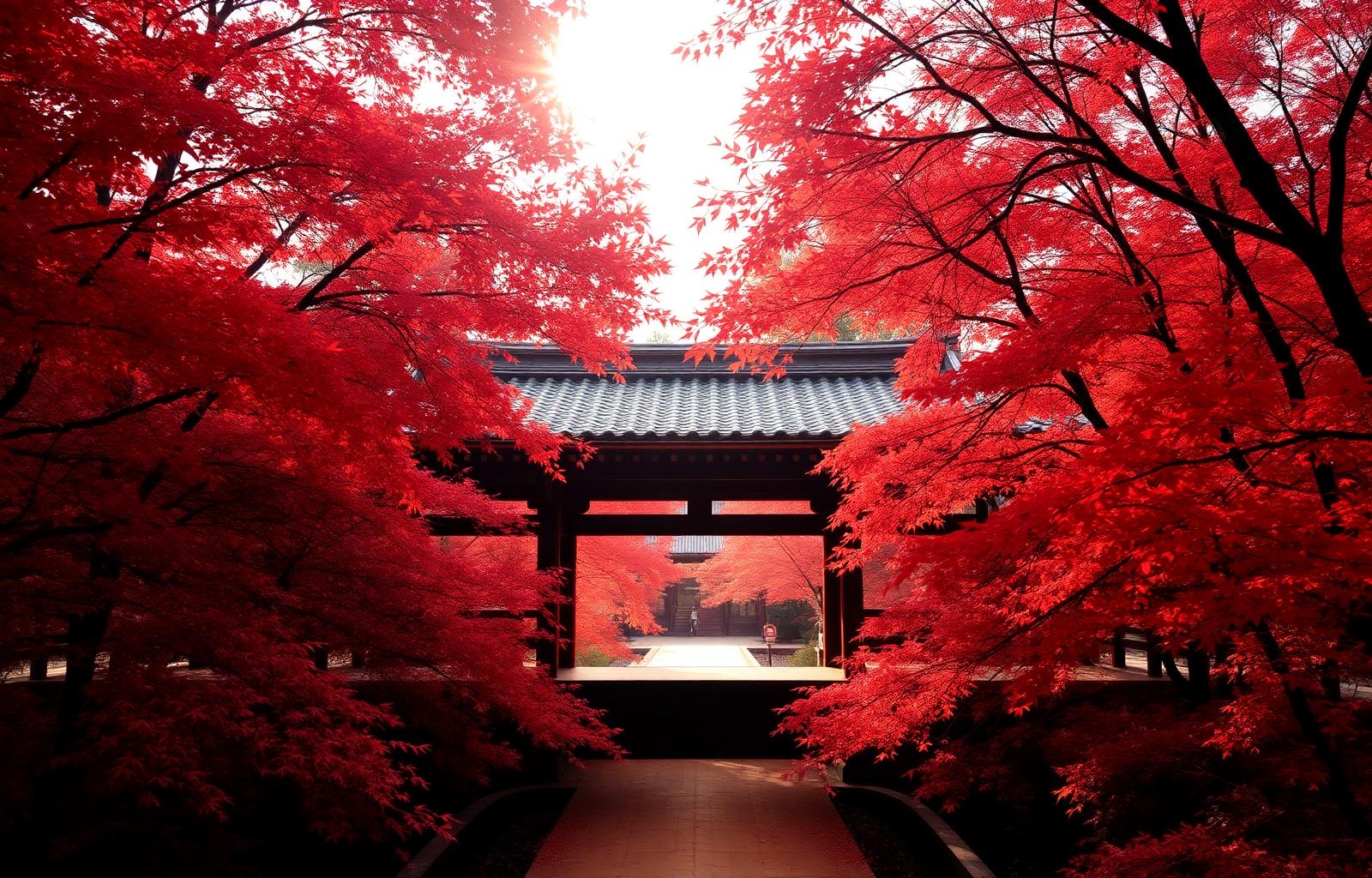
For historical planning: early to mid-November starts are possible; the strongest planning window is mid-November to early December.
The dense maple canopy at Tofukuji is best seen around Tsutenkyo Bridge. Allow 1–2 hours for the temple itself. Use JR or Keihan and walk; a car is a poor choice in peak season. The temple's official event page lists the normal November to early-December special autumn viewing period, but exact 2026 event details were not published as of 3 September 2026.
Eikando
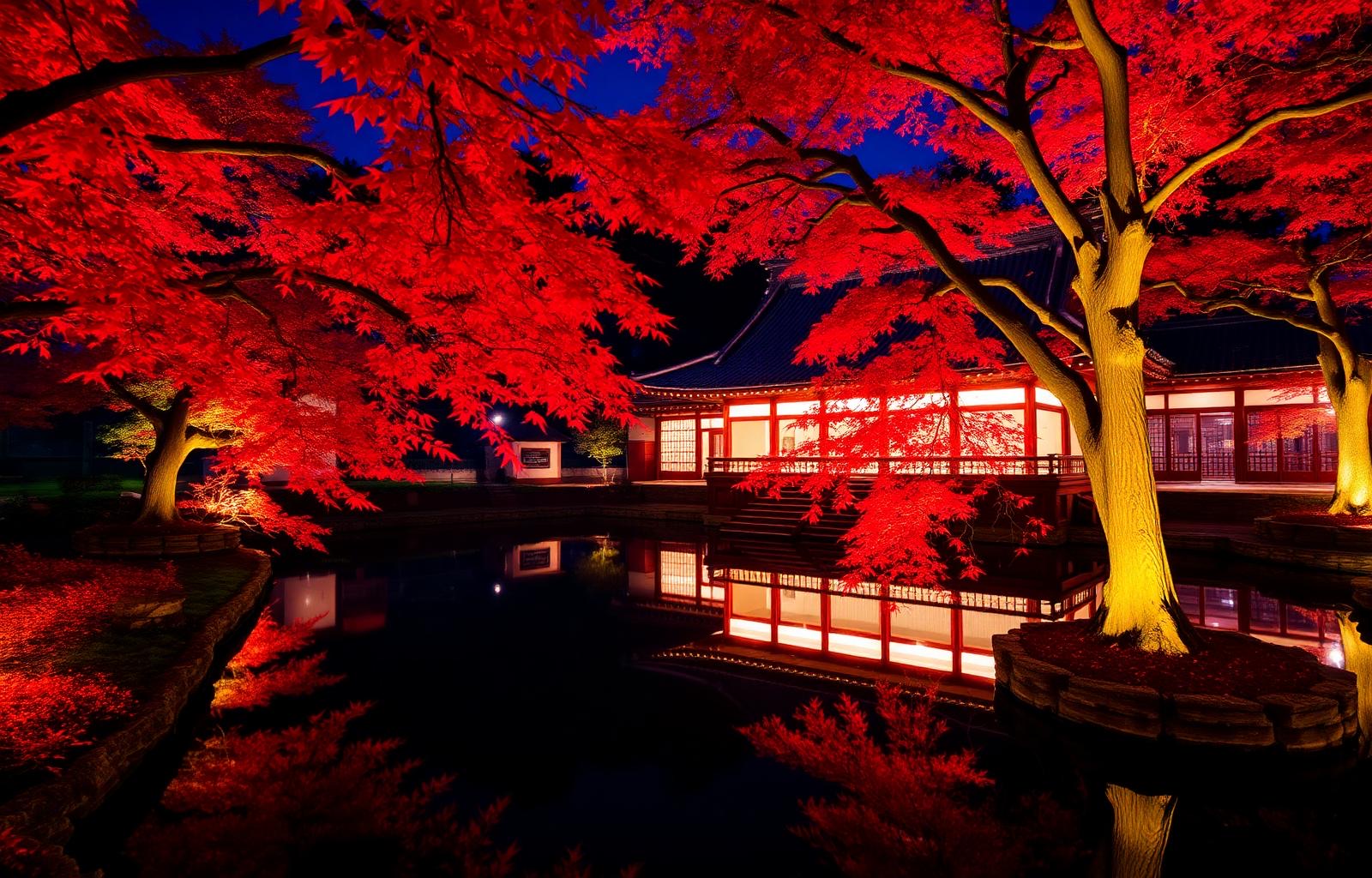
Eikando usually follows: early to mid-November starts are possible; the most reliable historical window is mid-to-late November into early December.
For red maple around temple buildings and evening viewing, Eikando is one of Kyoto's strongest choices. Allow 1.5–2.5 hours, and expect very high crowds at night. The official 2026 plan currently lists daytime viewing from 11 November to 6 December and night viewing from 20 November to 10 December, subject to change. These are planned admission dates, not a foliage forecast. Check the official Eikando notice before building an evening around it. Private cars and tourist buses are restricted during the viewing period.
Arashiyama and Saga
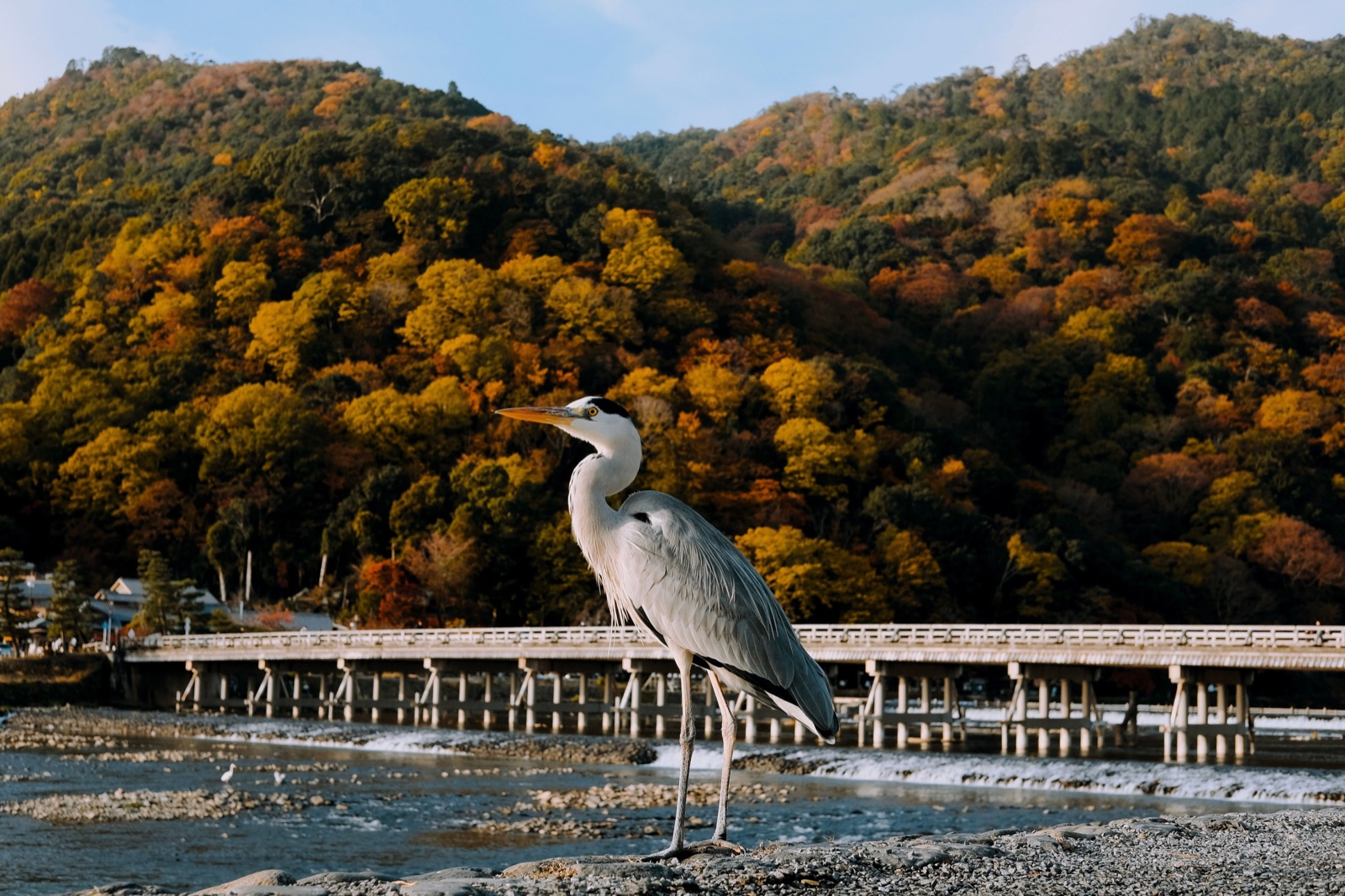
Arashiyama's historical window: mid-to-late November starts are possible; the main planning window is late November to early December, with sheltered Saga areas sometimes lasting into mid-December.
River, mountain backdrop, bamboo and temples make Arashiyama worth a half or full day even when one garden is past peak. Start around Togetsukyo Bridge, then move early towards the quieter Saga routes. Allow 3–5 hours. Use JR, Hankyu or local buses; driving is usually a mistake during the busiest weeks. Check the Kyoto Autumn Leaves Calendar and Kyoto's congestion forecast and live cameras close to your travel date.
Minoh Park
A normal historical band: early to mid-November starts are possible; the usual planning window is mid-November to early December, varying along the valley.
From Osaka, Minoh is one of the easiest autumn escapes. Follow the river towards Minoh Falls, allow 2–4 hours, and try momiji tempura along the way. Take the Hankyu train and walk. Cars, motorcycles and bicycles are not allowed inside the park, and there is no convenient park parking. Weekend traffic around the approach can still be heavy, so start early.
The official Minoh foliage page is especially useful because it reports colour stages and access changes. In 2025, a fire led to a closure near the waterfall, so check the current trail status rather than assuming the whole route is open.
Hokkaido or Honshu?
Choose Hokkaido if you want September or early October colour, cooler mountain air, onsen and a flexible road-based trip. A rental car is useful outside Sapporo, and you should build the route around elevation rather than one fixed city date.
Choose Honshu if your trip is in late November, you want temples and city parks, or you prefer trains and short side trips. Tokyo, Hakone, Kawaguchiko, Kyoto and Osaka can form a practical route, but Nikko and the higher mountain areas will usually be earlier.
Do not try to combine the full Hokkaido route with every classic Honshu stop in seven days. The transfer time removes the flexible days that help you catch actual colour and clear Fuji or mountain weather.
Sample Autumn Itineraries
Hokkaido: 6–8 days
Build the trip around one easy base and one optional mountain extension. The most forgiving default is Sapporo + Jozankei + Otaru:
| Days | Base | Plan |
|---|---|---|
| 1–3 | Sapporo | Hokkaido University, Nakajima or Maruyama Park, food and a weather buffer |
| 4 | Jozankei | Hoheikyo or the Koyo Gondola; stay overnight for onsen or return to Sapporo |
| 5 | Otaru | Historic centre, then Tenguyama or Asari if conditions are good |
| 6 | Sapporo | Keep this as a flexible city day or departure buffer |
| 7–8 | Optional extension | Choose Asahidake or Sounkyo for earlier mountain colour, or Niseko for a later, road-based route; do not try to do both extensions |
This core route works without a car: Sapporo, Jozankei and Otaru are connected by public transport, although weekend traffic can make Jozankei slow. For the optional mountain extension, use Asahikawa as the base for Asahidake or Sounkyo, or stay in Niseko for the Panorama Line, Annupuri and Goshiki Onsen. A rental car is useful in either mountain area, but ropeway operation, road conditions and weather should decide the day. If early September is your target, prioritise Daisetsuzan; if the trip is in early to mid-October, Niseko is the more natural add-on.
Honshu: 7–10 days
| Days | Base | Plan |
|---|---|---|
| 1–2 | Tokyo | Rikugien, Meijijingu Gaien or Shinjuku Gyoen; keep one city-weather option |
| 3 | Nikko | Okunikko and Lake Chuzenji if the higher areas are in season |
| 4–5 | Hakone or Kawaguchiko | Choose onsen or Fuji depending on the clearest forecast |
| 6–8 | Kyoto | Tofukuji, Eikando and Arashiyama, starting early |
| 9–10 | Osaka / Minoh | Minoh Park, food and a flexible departure buffer |
For an early or mid-October trip, reverse the emphasis: start with Nikko, Kamikochi, Hakuba or Myoko rather than expecting Kyoto to be at peak colour.
How to Check the 2026 Situation Before You Go
Use historical timing to choose a region, then use current reports to choose the day:
- Start with the JMC autumn foliage page, which now carries the 2 September 2026 first forecast and will be updated again in early October. Then compare it with tenki.jp foliage forecasts and Weathernews foliage updates as those providers publish or update their 2026 reports.
- Check the destination authority for ropeway operation, trail closures, parking and local events. Mountain cameras are more useful than a national headline when you are choosing between Asahidake, Sounkyo or Niseko.
- For Kyoto, use the official Autumn Leaves Calendar and congestion information close to the date.
- For Tokyo, Hakone, Nikko and Kawaguchiko, check transport and park notices separately from the foliage report.
Look for the terms colour appearing, partially coloured, peak and past peak. “Peak” can also mean a provider's target tree or viewing definition, so use it as a planning signal rather than a guarantee that every tree in a large area will match.
What to Pack and How to Avoid the Worst Crowds
Pack layers rather than one heavy jacket. Hokkaido, Nikko, Kamikochi and high ropeway areas can feel cold early in the season, while Tokyo, Kyoto and Osaka may still be comfortable in the afternoon. Bring comfortable shoes, a light waterproof layer, a small umbrella and a power bank. Mountain routes need warmer layers and better grip than a city-park day.
For the busiest destinations:
- Visit Kyoto temples, Nikko and Minoh early in the morning.
- Use weekday mornings for Rikugien, Meijijingu Gaien, Shinjuku Gyoen and Kawaguchiko.
- Stay near Chuzenji or Yumoto if Nikko foliage is the main purpose of the trip.
- Avoid driving into Kyoto, Arashiyama or central Tokyo during peak weekends.
- Keep one flexible day for rain, wind, Fuji cloud, a closed trail or a delayed colour change.
For flight planning, our Bangkok to Hokkaido travel guide covers the route to New Chitose and onward transfers.
More in this guide hub
Japan Ski Trip Planning: Best for budget, flights, lift passes, packing, and logistics.